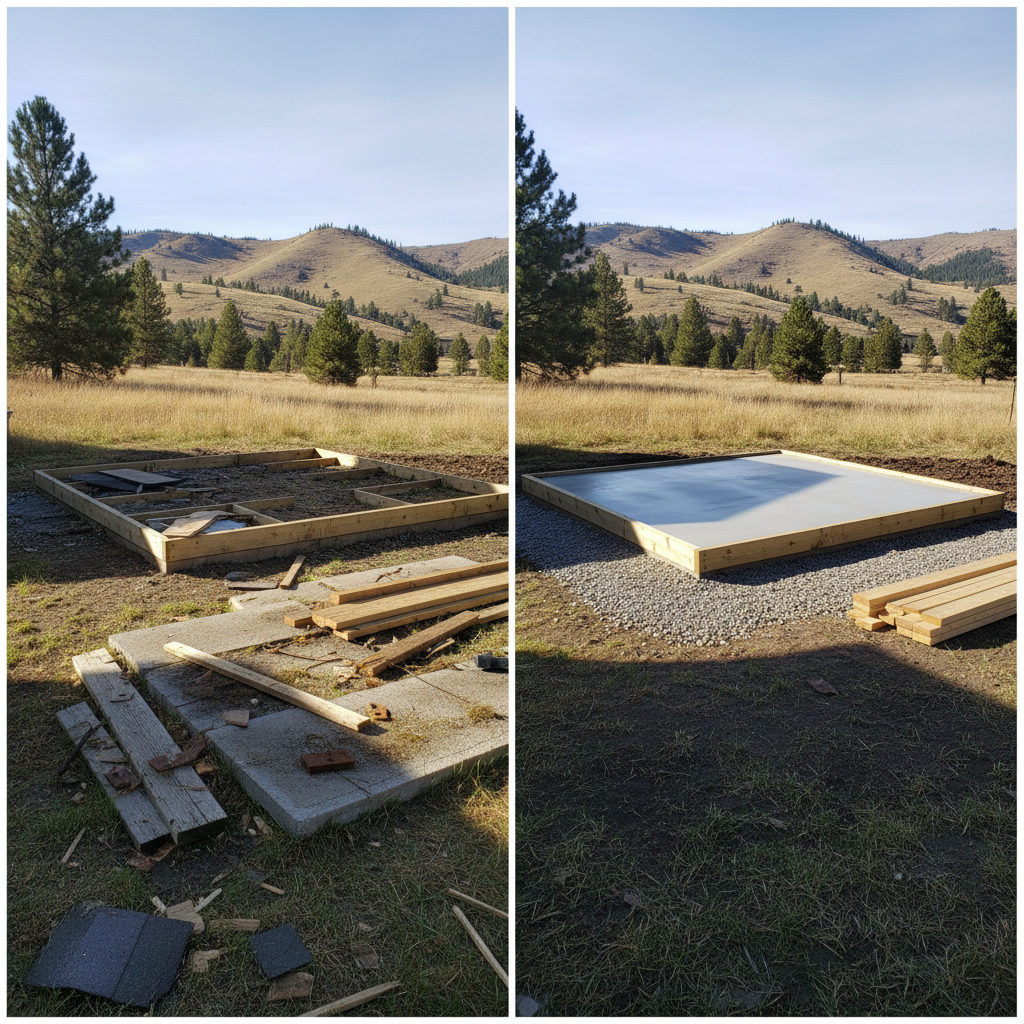
So, you're thinking about adding a shed to your property here in Helena. That's great! Maybe it's for extra storage, a workshop, or even an office. Whatever its purpose, one of the first big decisions you'll face, and honestly, one of the most important, is what kind of foundation you're going to put it on. You've got two main players in this game: a poured concrete slab or a well-built gravel pad. Let's talk about both.
Concrete Slab: The Heavyweight Champion
When most folks think about a solid foundation, they picture concrete. And for good reason. A poured concrete slab is undeniably the strongest, most durable option out there. It's basically a miniature version of what your house sits on.
- Durability and Strength: Nothing beats concrete for sheer strength. It's going to last for decades, no question. It provides a perfectly level, rigid surface that won't shift or settle, which is crucial for the structural integrity of your shed, especially if it's a bigger one or you're storing heavy equipment.
- Moisture Barrier: A properly poured slab, especially with a vapor barrier underneath, does an excellent job of keeping ground moisture out of your shed. This is a big deal in Montana, where we get plenty of snowmelt and spring rains. You don't want your tools rusting or your stored items getting moldy.
- Pest Control: It's a solid barrier against rodents and other critters trying to make a home under your shed. They can't burrow through concrete.
- Cost: Here's where concrete usually hits you. It's more expensive upfront. You've got the cost of materials, labor for excavation, forming, pouring, and finishing. Plus, if you ever want to move your shed, that concrete slab isn't going anywhere.
- Installation Time: It takes longer. There's prep work, pouring, and then you have to let it cure properly, which can be several days to a week before you can really build on it.
Gravel Pad: The Flexible Contender
A gravel pad, sometimes called a crushed rock foundation, is a very popular alternative, and for many shed applications, it's perfectly adequate. It's essentially a compacted layer of crushed stone, often with a perimeter of treated lumber.
- Cost: Generally, a gravel pad is going to be significantly cheaper than a concrete slab. Less material cost, less labor, and often something a handy homeowner can tackle themselves with a bit of effort.
- Drainage: This is where gravel shines. It allows water to drain right through it, preventing pooling around your shed's base. This is particularly good if you're on a slight slope or have well-draining soil, like some of the areas around the North Hills here in Helena.
- Flexibility: If you ever decide to move your shed, or even the whole shed and its foundation, a gravel pad is much easier to modify or remove than concrete.
- Installation Time: Much quicker to install. You can usually have a gravel pad ready in a day or two, depending on the size.
- Durability and Levelness: While durable, it's not as rigid as concrete. Over many years, especially with heavy loads or poor compaction, it can settle unevenly. This can lead to your shed frame twisting slightly, which might cause doors and windows to stick.
- Pest Control: Not as good as concrete. Rodents can potentially burrow through or under a gravel pad if it's not properly designed and maintained.
- Moisture: While it drains well, the floor of your shed will be closer to ground moisture. You'll definitely want to ensure your shed has a good floor system that's elevated and protected.
My Recommendation for Helena Homeowners
Alright, so which one should you pick? For most folks in Helena, especially considering our freeze-thaw cycles and the potential for expansive clay soils in some parts of the valley, I generally lean towards a concrete slab for anything substantial or permanent.
If you're building a larger shed (say, 10x12 or bigger), storing anything heavy like an ATV or a tractor, or if you plan on spending a lot of time in it as a workshop or office, bite the bullet and go with concrete. The added cost upfront will save you headaches down the road with settling, moisture, and potential structural issues. It's a true 'set it and forget it' solution that will protect your investment for decades.
However, if you're putting up a smaller shed (8x10 or less) for basic garden tools, a couple of bikes, or a seasonal storage unit, and you're on a tighter budget, a well-built gravel pad can absolutely work. Just make sure it's properly excavated, compacted, and framed with treated lumber. You'll also want to make sure your shed's floor joists are treated and elevated off the gravel to prevent rot.
Ultimately, it comes down to what you're using the shed for and how long you expect it to last without issues. If you want the absolute best, most worry-free foundation, concrete is your answer. If you're looking for a more economical and flexible option for lighter use, a quality gravel pad will serve you well. Here at Custom Sheds Helena, we've built on both, and we can help you figure out the best approach for your specific needs and site conditions.